











Executive summary
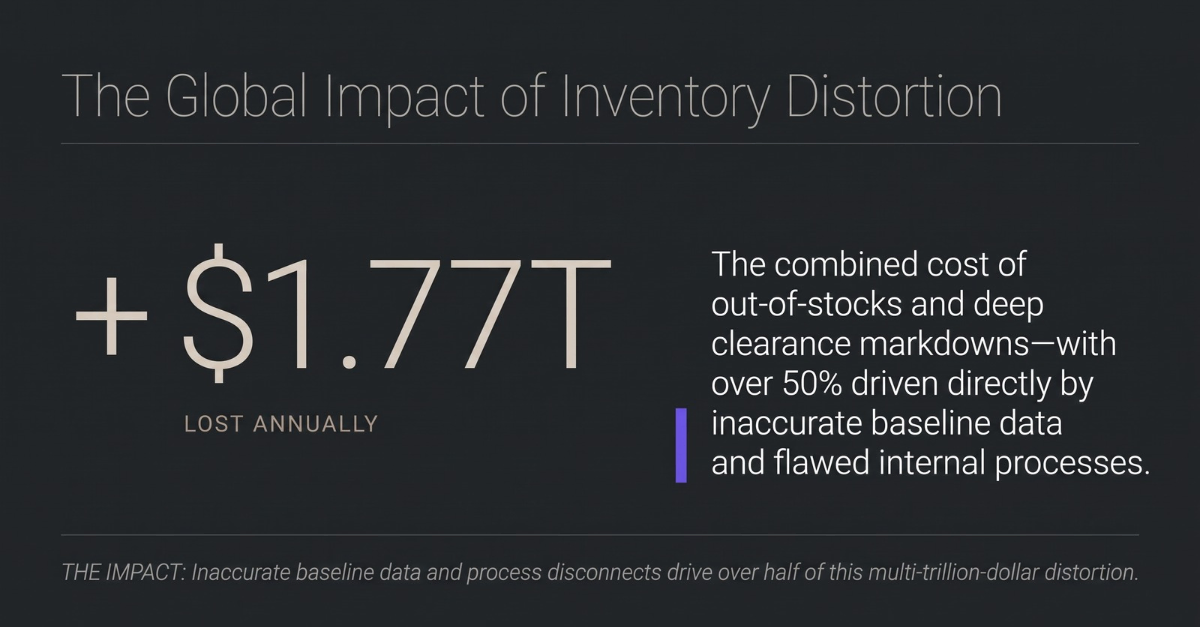
While asset protection teams often focus on physical theft, retail's most severe margin bleed stems from a larger, systemic failure: $1.77 trillion lost globally to inventory distortion, the combined cost of out-of-stocks and heavy clearance markdowns (IHL Group¹). Over half of that distortion is driven directly by inaccurate stock data and internal process disconnects.
Most retailers operate at around 65-70% inventory accuracy before deploying item-level technology, meaning one in three items is not where the system thinks it is.
Item-level RFID assigns every product a unique identity. Software reads those identities and flags anything that does not add up. The result is stock accuracy above 98%, a foundation that makes loss prevention, replenishment, and omnichannel fulfilment all more reliable.
Key benefits
- Every item that leaves without payment triggers a security alert, with item-level detail on what left, when, and where
- Return fraud and counterfeit goods are identified at the point of sale or return
- Supplier shortfalls are caught at the dock before they enter the stock picture
- Faster, more frequent stock counts free associates for customer-facing work
- Click-and-collect and ship-from-store fulfilment becomes more reliable when every item can be confirmed before an order is committed
With intelligent software like Frequentiel Octo+ connecting serialized tag data directly to existing ERP, POS, and security architectures, retailers eliminate the data blind spots where shrink hides while securing broader operational ROI across replenishment and omnichannel fulfillment.
Why is shrinkage important?
When retail executives discuss shrinkage, the conversation almost always defaults to shoplifting, organized retail crime, and physical security. But the true financial drag on retail is much larger than theft alone.
According to IHL Group's report, *"Retail Inventory Crisis Persists Despite USD 172 Billion in Improvements"*¹, global retail loses $1.77 trillion annually to Inventory Distortion, the combined cost of missed sales from out-of-stocks and steep clearance markdowns to flush excess stock. Crucially, IHL's analysis shows that over 50% of this multi-trillion-dollar problem stems from bad inventory data and flawed internal processes. Traditional shrinkage (physical theft and damage) accounts for only a fraction of the total margin lost when a business cannot accurately track its stock.
Most retail loss does not announce itself. It builds quietly inside the gap between what stock records say and what is physically on the shelf, and by the time it surfaces, the window to act has already closed.
RFID asset protection technology closes that gap at the source. It gives associates the item-level visibility and data intelligence they need to spot leakage before it compounds, cut shrink across the supply chain, and put loss prevention programs in place that deliver measurable ROI. This guide covers why shrinkage is a data problem, how item-level visibility prevents retail loss, and what a practical implementation path looks like, with verified figures and named retailer examples.
Why retail shrinkage is really an accuracy problem
Most legacy loss prevention programs are built around catching theft after it happens. Theft is only one part of the shrinkage equation, and even the most advanced detection technologies cannot compensate for inaccurate stock data. Bad stock information is what lets retail loss stay invisible, making it hard to spot where it is actually occurring until it surfaces as a real financial problem.
According to research from Auburn University's RFID Lab², the average retailer operates at around 65% inventory accuracy before deploying item-level RFID technology. In practical terms, that means roughly one in three items is not where the system thinks it is. At that level of inaccuracy, even well-resourced loss prevention tools become unreliable, because the data they depend on is wrong before they even begin. When an item is missing, leadership cannot verify whether it was stolen, miscounted during receiving, misplaced in a stockroom tote, or sold under the wrong SKU.
What counts as shrinkage (and what's actually just mis-counted stock)
True shrinkage is not a single problem. It originates from four distinct sources, and only two of them involve deliberate wrongdoing:
- External theft, including shoplifting and organised crime rings targeting goods for resale
- Internal theft by employees with access to stock
- Supplier and delivery shortfalls, where items are invoiced but never received
- Administrative and counting errors, where stock exists but is logged incorrectly, creating phantom inventory
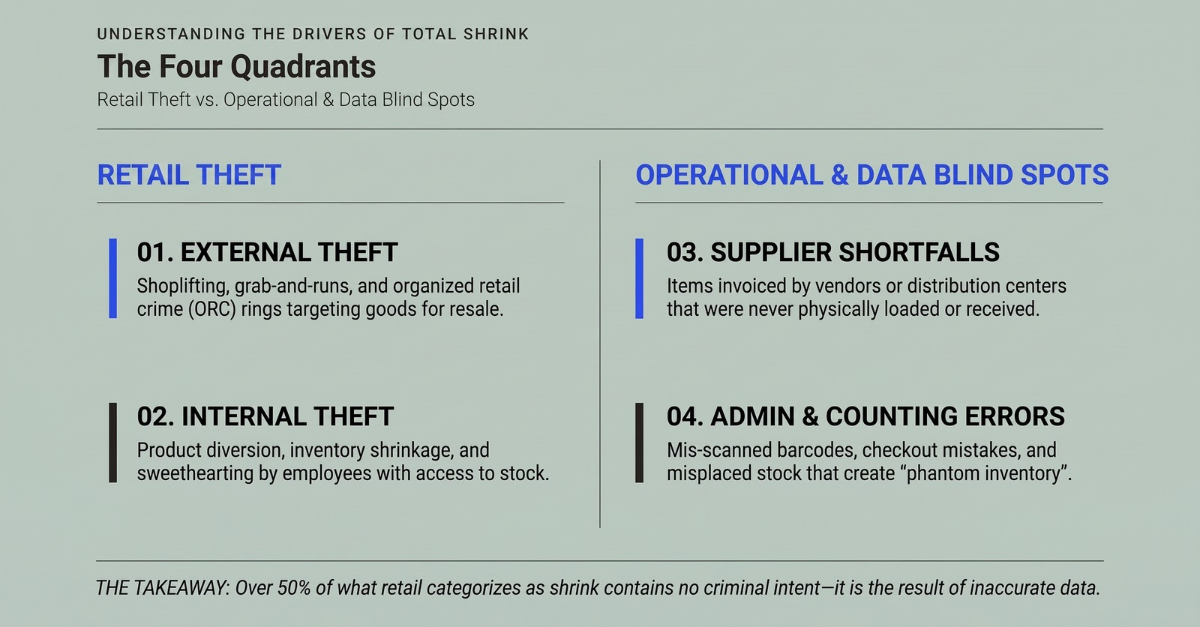
Phantom inventory is stock the system believes is available but that is either missing, misplaced, or was never logged correctly in the first place. It generates false replenishment signals, distorts availability data, and makes omnichannel promises the shop floor cannot keep. Organised theft and criminal networks account for real losses, but phantom stock can be just as damaging because it stays invisible until something fails downstream.
A shopper asks for a product, the system confirms it is in stock, and the associate cannot find it. By that point the sale is gone, replenishment is running on wrong numbers, and the customer has already walked out.
Why you can't prevent what you can't see
Store associates conducting manual counts a few times a year are not failing at their jobs, they are just working with tools that were never built for the pace of modern retail. By the time a count is completed, logged, and reconciled, the location has processed enough transactions to make those numbers unreliable. A discrepancy that started in January may not surface until March, at which point replenishment has run on wrong data, availability promises have been made on stock that does not exist, and the window to intervene has long closed.
Item-level tracking gives those same associates the ability to read every tagged item in minutes, as often as the floor requires, without stopping operations. Real-time monitoring replaces the delayed snapshot that manual counting provides, and the question shifts from "what did we lose last quarter" to "what is happening right now and where."
The limits of older anti-theft technologies
Security gates, video surveillance systems, and CCTV cameras detect and record incidents, but they do not reconcile stock data or provide the insight needed to spot patterns and cut retail loss proactively.
Electronic article surveillance (EAS) gates and devices know something left the shop without being paid for, but they cannot identify what it was, track its movement through the location, or connect that event to stock records. Video cameras and surveillance systems create a visual record of incidents, but reviewing footage after the fact is reactive and gives little information that helps a business understand the broader patterns behind organised theft or prevent future leakage. Neither technology links to stock management systems to provide the real-time picture a modern loss prevention program depends on.
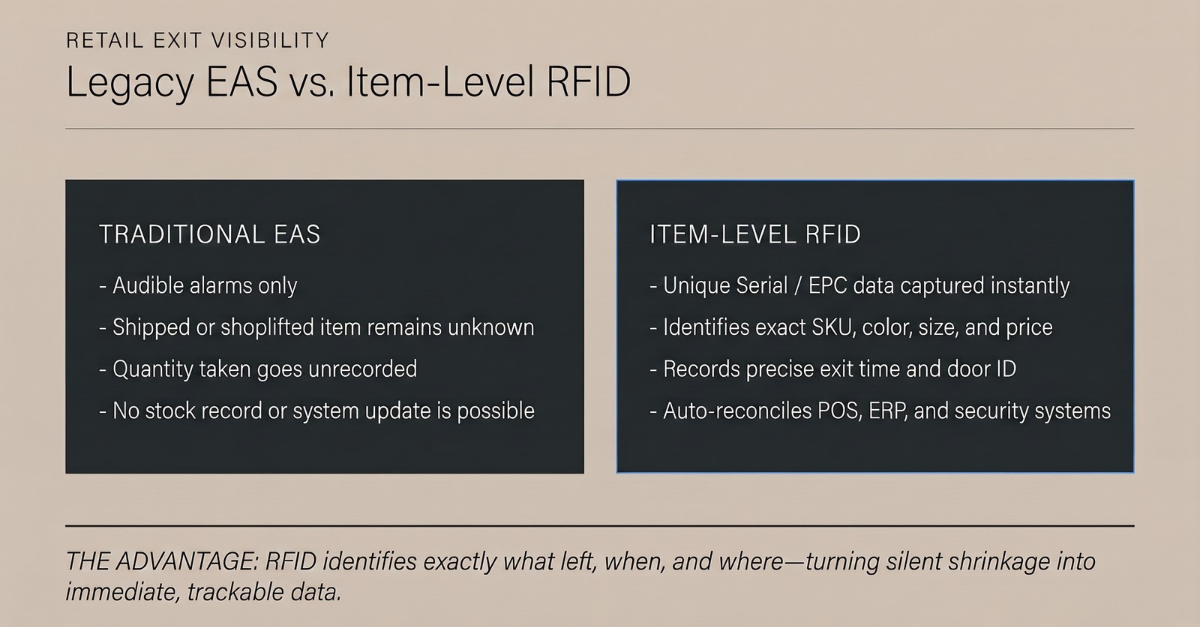
Octo+ by Frequentiel fills that gap by connecting item-level tag data to stock records, turning each security event into an actionable data point and giving staff the context to move from reactive incident response toward proactive loss prevention.
How item-level RFID prevents loss
Each product carries its own RFID tag. Software reads those tags on every scan and flags anything that does not add up, whether that happens through scheduled cycle counts, on-demand reads, or continuous overhead readers in operations that need them. That is the complete mechanism that modern loss prevention solutions and day-to-day operations depend on, and it is what separates effective technologies from systems that only catch problems after they have already compounded into real leakage.
Real-time accuracy as the foundation
Every item carries a unique Electronic Product Code (EPC). RFID technology enables fast, frequent counts that keep expected stock aligned with what is actually on the floor, surfacing discrepancies far sooner than manual methods allow. Retailers with fixed always-on readers gain real-time visibility; others achieve the same high accuracy through regular scanning cycles that take a fraction of the time a manual count requires. Item-level tracking lifts stock accuracy to above 98%, up from a manual baseline that typically sits between 60% and 75%.
Accurate stock data builds a single source of truth that loss prevention, store operations, and customer-facing associates can all rely on. Without it, the analytics and intelligence that a modern loss prevention program promises are built on unreliable data, making it hard to spot where losses are occurring, improve day-to-day outcomes, or demonstrate ROI to leadership.
Detecting and reducing theft
Every tagged item that leaves without being paid for triggers a security alert. The same tag that handles security is also keeping the stock count accurate, giving retailers two operational benefits from a single technology investment and helping staff build a fuller picture of theft patterns across their locations:
- Exit reads identify the specific item that triggered the alert, giving item-level insight into exactly what left the shop, when, and through which door
- Traditional security tags can tell you that something left the store without payment but not what it was. Item-level RFID closes that gap: loss patterns by SKU, location, and time of day become visible, giving security staff the detail they need to identify which products and areas carry the highest risk.
- In operations with fixed overhead readers, the system can track item movement across floor zones, creating an audit trail that shows how losses occurred and where, not just that something left through the exit
This approach raises revenue by up to 1.5% through reduced shrinkage and theft, according to Gartner³. With the deployment of Octo+ across its retail network, KIABI gained item-level visibility into security events across stores, giving their teams the ability to identify theft patterns and act on them rather than responding to incidents one by one.
Tackling fraudulent returns and high-value goods
Return fraud means sending back an item for a refund on something that was never legitimately purchased. It is a growing issue across retail, particularly for high-value goods, and one that manual systems and traditional security technologies have no reliable way to catch at scale. Item-level RFID technology helps retailers address fraud by connecting every item's physical identity to its transaction history:
- Confirms whether an item was genuinely sold before a refund is accepted, cutting fraudulent cases and protecting profits
- Flags grey-market and counterfeit goods at the point of sale or return, protecting brand integrity and customer trust
- Surfaces the specific detail needed to catch suspicious return patterns before they become significant leakage
Catching supplier and internal losses early
A meaningful share of retail loss never reaches the sales floor. RFID loss prevention checks at dock doors catch supplier and delivery problems before they enter the picture:
- Every inbound shipment is verified automatically against what was ordered, flagging discrepancies between supplier manifests and what actually arrived
- Employees can identify and report tagging errors at the point of receiving, building supplier accountability and cutting losses from delivery shortfalls
- Supply chain visibility improves, giving retailers a more reliable stock picture and trimming the shrink that starts upstream before it ever reaches shelves
RP55 achieved 100% shipment accuracy for major retail partners after deploying Octo+, with supplier chargebacks issued automatically for non-compliant deliveries.
From retail loss prevention to full stock ROI
Most conversations about this technology start with loss prevention but they rarely stay there. The same tags that cut shrink also power replenishment, omnichannel fulfilment, and stock availability, and the data behind each of those use cases comes from the same infrastructure.
One investment, many uses
Once every product is tagged, the system delivers benefit well beyond loss prevention:
- Stock counts that once demanded hours of dedicated time can now be completed faster and more often using handheld readers, freeing associates to spend more of their day on customer-facing work
- Real-time replenishment alerts trigger automatically when items drop below threshold, cutting the out-of-stocks that drive customers toward competitors
- Click-and-collect and ship-from-store fulfilment becomes more reliable when every item can be located and confirmed before an order is committed, reducing the failed pickups and last-minute cancellations that damage the customer relationship
- Stock management becomes more efficient as the system provides continuous, accurate data rather than periodic snapshots
- Analytics and reporting deliver insight that lets retailers optimize layouts, product placement, and loss prevention efforts
Retailers gain more than a single-purpose security tool from this kind of deployment. They gain an accurate, real-time view of stock that supports every retail function.
Adding up the full return
The results compound. Gartner's³ research puts verified figures behind each key benefit:
- Sell-through improves by 1% to 3.5% from better on-shelf availability and fewer stockouts, directly supporting sales performance
- Labour hours tied to stock counting fall by 10% to 15% as reconciliation becomes more efficient and automated
- Revenue increases by up to 1.5% from reduced shrinkage and theft
- Safety stock levels shrink as accuracy improves, freeing up working capital across locations
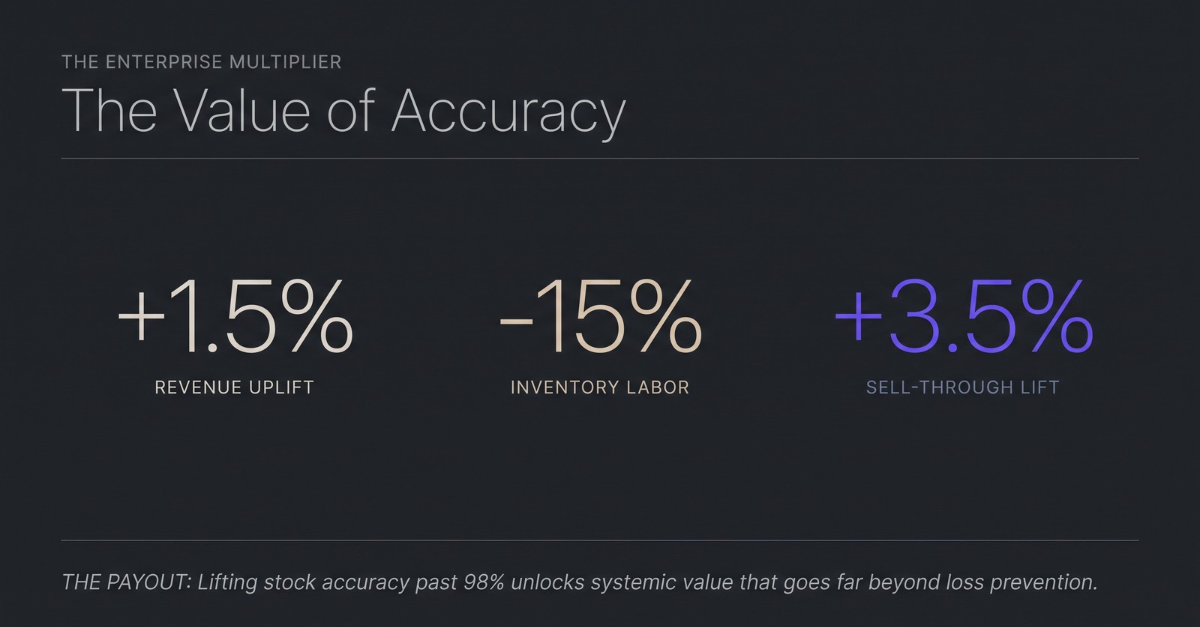
These gains run on the same infrastructure investment, helping retailers build a credible case that extends well beyond loss prevention and demonstrates value across the wider organisation.
Why the software makes the difference
Tags and readers generate data. Octo+ turns that data into actionable intelligence and delivers the insight retail staff need to act. Accurate stock counts, automated security alerts, real-time analytics, and integration with ERP, WMS, POS, and omnichannel systems create a connected loss prevention program that supports both security and broader performance.
RFID loss prevention across retail segments
Item-level loss prevention technology is not equally mature across every category. Retailers can learn the most from established deployments, see where results run strongest, and understand where the conversation is still developing.
Fashion, apparel and footwear
This is where item-level technology has the longest track record and the clearest fit for loss prevention. The structural challenge stays consistent across the segment:
- Thousands of size and colour combinations make manual tracking operationally unreliable and create persistent availability gaps
- High theft sensitivity and organised crime rings targeting specific apparel goods create direct margin exposure across locations
- Without item-level visibility across floor zones, stockrooms, and fitting rooms, retailers can only respond to loss after the fact rather than preventing it
According to RFID Journal⁴, item-level accuracy in apparel stores globally sits between 55% and 80%, with at least $500 billion of misrepresented stock across the sector. That scale of exposure is what has driven widespread RFID adoption across fashion and apparel retail over the past decade. The question today is no longer whether the technology works, but how to build a deployment that holds up across their own operations.
Luxury goods
Luxury retail carries a specific challenge that standard security systems and EAS technologies struggle to address effectively:
- Grey-market diversion, where genuine goods reach the market through unauthorized channels, creating fraud and brand damage
- Counterfeiting, where fake goods undermine brand value and create legal and reputational risk
Smart tagging embeds a unique RFID identity into each item during production, creating a verifiable record that connects the physical product to its complete supply chain history before it ever reaches a retailer's floor. That provenance record addresses both challenges directly. For grey-market diversion, any item that has moved through unauthorized channels will fail authentication when checked against the central record, at any point from goods-in to point of sale. For counterfeiting, the embedded tag provides digital proof of origin that a visual inspection alone cannot deliver, giving associates a reliable way to confirm an item is genuine at point of sale or return. The same data supports the sales conversation: associates can access full product history and provenance in the moment, which reinforces brand storytelling and the premium experience luxury customers expect.
General merchandise, health, beauty and cosmetics
For retailers managing large, mixed inventories, the stock challenge is SKU complexity and the day-to-day issues that come with it. Loss prevention delivers particular value in environments where:
- High-value consumer goods such as cosmetics, health supplements, and personal care products are frequently targeted for theft and difficult to monitor at scale without item-level tracking
- Wide product ranges and rapid stock rotation create persistent visibility gaps that make it difficult to identify where loss is occurring before it compounds
- Supply chain complexity introduces receiving shortfalls and substitution errors that enter the stock picture undetected and inflate shrinkage figures
Item-level technology brings the same accuracy and loss prevention capability to these categories that apparel retailers have relied on for a decade, with the added benefit of batch and expiry tracking for health and beauty goods.
Grocery and food retail: a different conversation
Grocery and food retail presents a more nuanced picture. Loss prevention is a real use case, particularly for high-value categories such as wine, spirits, fresh meat, and health and beauty products where shrinkage exposure is significant and the tag economics make sense. For lower-cost ambient goods, the ROI case is harder: the cost of tagging each item can exceed the margin on the item itself, which limits how widely the technology is deployed across a full grocery estate. Where RFID is deployed in grocery, the main in-store use cases run alongside loss prevention:
- Frequent restocks and short shelf lives call for continuous real-time monitoring rather than periodic stock counts
- Strict traceability rules create regulatory and safety exposure when records are incomplete or inaccurate
- Food recall management demands the ability to instantly identify affected goods and batches across the supply chain, giving regulators and shoppers the specific detail they need
Implementing RFID-based loss prevention
Assessing your shrink and accuracy baseline
Before deploying any loss prevention solutions, map out what today's situation looks like in concrete terms across your locations:
- Current stock accuracy by product category and store location, to understand where the visibility gap is most significant
- Value of stock losses per period, broken down by source (theft, supplier shortfalls, and admin errors) to identify where the most significant issues lie
- Hours spent on manual monitoring and counting, and how often they happen
- Known discrepancy rates between what was ordered and what arrived, to identify the scale of shipping and receiving discrepancies
This baseline is the only way to measure what the solutions you deploy actually deliver and helps retailers build a credible, data-backed case for investment. With manual counting, stock records typically sit between 60% and 75% accuracy. After a well-executed deployment, accuracy climbs to above 98%, according to Gartner³. The gap between those two numbers is the starting point for every ROI conversation and the foundation for a measurable loss prevention program.
Choosing technology and partner solutions
Selecting the right technology for loss prevention means understanding two distinct layers and the role each plays in delivering results:
- Hardware, such as tags, readers, antennas, and scanning devices, captures the signal and makes item-level identification physically possible
- Software turns those signals into actionable insight: accurate stock counts, automated alerts, real-time analytics, and integrations that connect loss prevention data to the systems that support decision-making
The hardware generates data. The software determines what a business can do with it, which loss prevention approach it can support and execute reliably, and how well it can help retailers cut leakage, improve stock management, and demonstrate ROI.
Octo+ by Frequentiel is the software layer. It is hardware-agnostic, working across tags, readers, and handheld devices from multiple vendors so retailers can choose equipment that fits their existing environment and scales with their operation.
Working with systems already in place
The practical question every operations or IT lead asks before committing to loss prevention solutions is whether they will connect to and work with what is already running. Octo+ integrates with the systems retail businesses already depend on, providing seamless connectivity across every critical function:
- POS systems, so transactions and stock updates stay synchronized in real-time across all locations
- ERP platforms, so stock data flows into planning, finance, and procurement without manual reconciliation
- WMS and OMS, so warehouse and fulfilment workflows draw from the same stock picture as the shop floor
- E-commerce platforms, so online availability reflects what is physically confirmed in store, cutting cancellations and improving customer satisfaction
For loss prevention specifically, this connectivity is what makes security alerts actionable. When a tagged item leaves without a completed sale, the system flags it through the day-to-day infrastructure the team already uses, without a separate security platform or extra training for staff.
Octo+ covers two areas of deployment: In Store, supporting cycle counting, item location, replenishment, and checkout integration; and In Supply Chain, supporting inbound verification, shipment reconciliation, and supplier accountability. Retailers starting with loss prevention can extend to full supply chain visibility without switching solutions or disrupting existing workflows.
Measuring ROI and impact
Once deployed, ROI from loss prevention solutions comes from watching four areas:
- Stock accuracy improvement against the baseline set before deployment, tracking progress toward the targets fixed at the start
- Value recovered through prevented leakage, faster discrepancy identification, and reduced time spent on manual reconciliation
- Labour hours redirected from manual counting and watching to customer-facing work and higher-value day-to-day tasks
According to RFID Journal⁴, retailers typically report payback periods of 9 to 18 months for in-store deployments, though timelines vary depending on deployment scale and operational complexity. The 1% to 3.5% improvement in sell-through (the share of stock that moves from shelf to sale, across both in-store and online channels) and up to 1.5% revenue increase from reduced shrink documented by Gartner³ are the two headline figures to track from day one.
Get started with RFID loss prevention
The infrastructure conversation in retail has shifted. Item-level technology is now accessible and proven across retailers of all sizes. It is becoming the standard for loss prevention, and most retailers now face a question of how to build the right solution for their specific environment, systems, and day-to-day needs, not whether to deploy it at all.
Frequentiel's Octo+ is the software layer that makes loss prevention actionable, connecting item-level data to the systems and staff that need it. Whether you are starting with loss prevention and planning to expand into full stock management, or building a complete retail operation from the ground up, Octo+ streamlines that path. It provides the connectivity, analytics, and intelligence to help retailers cut leakage, improve accuracy, enhance day-to-day work, and deliver better outcomes across every location and the supply chain operations it supports. A powerful data layer, once in place, keeps paying back long after the initial rollout.
Speak to the Frequentiel team about your retail loss prevention needs
Sources
¹ IHL Group — "Fixing Inventory Distortion", Research Report, 2025.
² Auburn University RFID Lab.
³ Gartner — "Innovation Insight for Item-Level RFID in the Transformation of the Retail Store", Sandeep Unni, G00788040.
⁴ RFID Journal — "Retail Item-level RFID: Value Creation and Future Direction", Dean Frew, 12 November 2025.
